
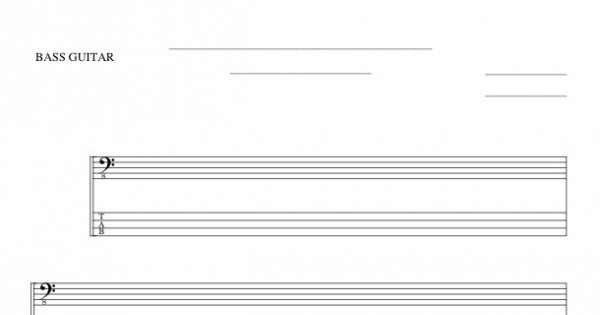
Empty Music Sheet: A Blank Page for Your Musical Ideas
An empty music sheet is a blank canvas for music. It gives composers, songwriters, students, and musicians a place to record melodies, harmonies, rhythms, and musical ideas. Whether you prefer pencil and paper or a digital template, starting with a clean sheet can make it easier to organize a new composition.
What Is an Empty Music Sheet?
An empty music sheet, also called blank sheet music or manuscript paper, contains the staff lines used to write musical notation. A standard staff has five horizontal lines and four spaces. Notes are placed on the lines and spaces to show their pitch, while symbols such as clefs, time signatures, and rests provide additional information.
Blank music paper may include one staff per system or several grouped staves. Some formats are designed for a specific instrument or ensemble, while others are general-purpose and can be adapted to different musical needs.
Common Uses for Blank Sheet Music
- Composing: Write down original melodies, chords, and musical arrangements.
- Learning notation: Practice identifying notes, drawing symbols, and reading rhythms.
- Transcribing: Notate music by ear or transfer a musical idea from a recording.
- Teaching: Create exercises for lessons, rehearsals, and classroom activities.
- Planning arrangements: Sketch parts for singers, bands, or instrumental groups.
Choosing the Right Music Sheet
The best empty music sheet depends on what you plan to write. A single-staff layout may work well for a melody or a beginner’s exercise. Piano music typically uses a grand staff, which combines treble and bass clefs. Guitarists, percussionists, and other instrumentalists may prefer notation paper tailored to their needs.
Consider the spacing, too. Wider staff spacing can make notes and markings easier to read, especially for beginners or musicians who need room to write lyrics, fingerings, or performance instructions. For detailed arrangements, a page with more systems may help keep the music organized.
How to Start Writing on an Empty Music Sheet
- Choose a clef. The clef identifies the pitches represented by the staff. Treble and bass clefs are common, but other clefs are used as well.
- Add a key signature. If your music uses a particular key, write the sharps or flats after the clef.
- Set the time signature. This indicates how beats are grouped into measures.
- Mark the tempo. A tempo marking gives performers an idea of the intended speed.
- Write your notes and rhythms. Place notes on the staff and use stems, flags, beams, and rests to show their durations.
- Review your work. Check measure lengths, note placement, and symbols to make sure the music is clear and readable.
Paper or Digital Music Sheets?
Printed manuscript paper is convenient for quick sketches, lessons, and handwritten compositions. It is easy to carry and does not require a device. Digital templates, on the other hand, can be duplicated, resized, and edited with notation software or a tablet. Some musicians use both: they jot down an idea by hand and later enter it into a digital score.
A Blank Page Full of Possibility
An empty music sheet may look simple, but it can hold the beginning of a song, a practice exercise, or a complete arrangement. Choose a layout that fits your instrument and purpose, then use the page to capture ideas before they disappear. Every finished score starts somewhere—and often, it starts with a blank staff.
5 Essential Tips for Preparing Your Blank Music Sheets
- Choose the right clef for your instrument.
- Write the time signature near the clef.
- Add a key signature if needed.
- Keep notes aligned with the beats.
- Leave room for lyrics or annotations.
Choose the right clef for your instrument.
Choose the right clef for your instrument before writing on an empty music sheet. The clef shows which pitches belong to each line and space, so using the one that fits your instrument makes the music easier to read and play. For example, piano music commonly uses both treble and bass clefs, while many flute and violin parts use the treble clef.
Write the time signature near the clef.
Write the time signature just after the clef, before the first measure, so performers know how the beats are grouped from the start. The top number shows how many beats are in each measure, while the bottom number indicates which note value receives one beat. Make sure the numbers are clear and aligned on the staff for easy reading.
Add a key signature if needed.
Add a key signature if your piece uses a particular key. Written after the clef, it shows which notes should be sharp or flat throughout the music, helping keep the notation clear and reducing the need to mark those notes repeatedly. If the music has no sharps or flats, you can leave the key signature blank.
Keep notes aligned with the beats.
Keep notes aligned with the beats to make your music easier to read and perform. Place each note in the correct position within its measure, and use bar lines to separate groups of beats. Clear spacing helps musicians see the rhythm at a glance and follow the timing accurately.
Leave room for lyrics or annotations.
Leave extra space on your empty music sheet for lyrics, chord names, fingerings, or other annotations. A little room above or below the staff makes it easier to add reminders, clarify how a passage should be played, and keep your musical ideas organized as the piece develops.