
Sheet Music Notes: A Beginner’s Guide
Sheet music uses notes and other symbols to show how music should be played or sung. At first, the page may look like a collection of dots, lines, and markings. Once you understand the basics, those symbols form a practical guide to pitch, rhythm, and musical expression.
The Staff and Note Names
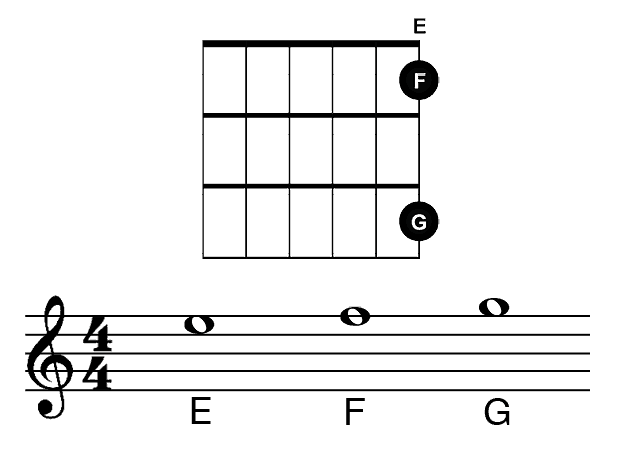
Most written music appears on a staff: five horizontal lines and the four spaces between them. A note’s position on a line or space indicates its pitch. Notes move upward through the musical alphabet—A, B, C, D, E, F, and G—and then repeat in a higher octave.
The clef at the beginning of the staff tells you which pitches the lines and spaces represent. The treble clef is commonly used for higher-pitched instruments and voices. The bass clef is commonly used for lower-pitched instruments and voices. Notes that fall outside the staff can be written on short added lines called ledger lines.
Note Values and Rhythm
A note’s shape indicates how long to hold it relative to the other notes. Common note values include:
- Whole note: An open oval with no stem.
- Half note: An open oval with a stem.
- Quarter note: A filled-in oval with a stem.
- Eighth note: A filled-in note with a stem and one flag, or a beam connecting it to another eighth note.
- Sixteenth note: A filled-in note with a stem and two flags, or two beams.
In common time, a whole note is often counted as four quarter-note beats, a half note as two, and an eighth note as half a beat. The time signature and tempo help determine how these values work in a particular piece.
A dot placed after a note increases its length by half of its original value. For example, a dotted half note lasts as long as a half note plus a quarter note. A tie—a curved line connecting two notes of the same pitch—combines their durations into one sustained sound.
Rests: The Sound of Silence
Music also uses symbols called rests to show when a musician should remain silent. Rests have durations that correspond to note values, including whole, half, quarter, eighth, and sixteenth rests. Reading rests accurately is just as important as reading notes because they shape a piece’s rhythm and phrasing.
Sharps, Flats, and Naturals
Accidentals change a note’s pitch. A sharp (♯) raises a note by a half step, while a flat (♭) lowers it by a half step. A natural sign (♮) cancels a sharp or flat. Accidentals may appear beside individual notes, while a key signature places them near the clef to show which pitches are altered throughout a passage.
Time Signatures and Measures
The time signature appears near the beginning of a piece, after the clef and key signature. Its top number indicates how many beats are in each measure, while its bottom number indicates which note value receives one beat. Bar lines divide the staff into measures, making rhythms easier to follow.
Tips for Reading Sheet Music
- Identify the clef. The same position on a staff represents different pitches in different clefs.
- Check the key signature and time signature. These provide important information before you begin.
- Read rhythm separately. Clap or count the note and rest values before playing the passage.
- Look for patterns. Scales, repeated notes, and familiar rhythmic figures can make a passage easier to understand.
- Practice slowly. A steady, comfortable tempo helps build accuracy before you increase speed.
Learning to read sheet music takes practice, but each symbol has a purpose. By recognizing note positions, durations, rests, and musical markings, beginners can gradually turn written notation into confident performance.
9 Benefits of Sheet Music Notation
- Shows the pitch of each note.
- Explains rhythm and timing.
- Helps musicians learn new songs.
- Makes musical ideas easier to share.
- Supports practice and performance.
- Works across many instruments.
- Records melodies for future use.
- Builds music-reading skills.
- Encourages accurate ensemble playing.
6 Drawbacks of Sheet Music Notation
- Can be difficult for beginners to read.
- Requires practice to learn note values.
- May not show a song’s exact feel.
- Handwritten notation can be hard to decipher.
- Some arrangements are costly.
- Page turns can disrupt performance.
Shows the pitch of each note.
One of the biggest advantages of sheet music is that it shows the pitch of each note. A note’s position on the staff tells musicians which sound to play or sing, helping them follow a melody accurately. This visual guide makes it easier to learn unfamiliar songs, play together with others, and bring the composer’s musical ideas to life.
Explains rhythm and timing.
Sheet music notes make rhythm and timing easier to understand by showing how long to play or sing each sound and when to pause. Note values, rests, time signatures, and bar lines help musicians keep a steady beat and coordinate with others. With these visual cues, performers can follow the timing of a piece more accurately, even when learning music they haven’t heard before.
Helps musicians learn new songs.
Sheet music notes help musicians learn new songs by showing the melody, rhythm, and timing in a clear, organized format. Instead of relying only on memory or repeated listening, players can see how high or low each note is and how long to hold it. This makes it easier to practice unfamiliar music, work through tricky passages, and play a song more accurately.
Makes musical ideas easier to share.
Sheet music makes musical ideas easier to share by giving musicians a common way to record and communicate melodies, rhythms, and harmonies. Instead of relying on memory or lengthy explanations, a composer can write down a piece and share it with performers anywhere. Musicians can then read the same notes, learn their parts, and play together—even if they have never rehearsed or met before.
Supports practice and performance.
Sheet music notes support both practice and performance by giving musicians a clear guide to pitch, rhythm, tempo, and expression. During practice, they help players spot challenging passages, repeat sections accurately, and track progress. In performance, written notes let musicians follow the same musical arrangement, even when playing together in an ensemble, helping create a more consistent and coordinated result.
Works across many instruments.
Sheet music notes work across many instruments, making it easier for musicians to learn, share, and perform the same piece. Although instruments may use different clefs, ranges, or transpositions, written notation provides a common musical framework that can be adapted for piano, guitar, violin, flute, and many others. This versatility makes sheet music useful for solo practice, ensembles, and arranging music for different groups.
Records melodies for future use.
Sheet music notes preserve melodies so they can be revisited long after they’re first created or heard. By recording pitches and rhythms in a written form, musicians can remember a tune, share it with others, and perform it again in the future—even when no audio recording is available.
Builds music-reading skills.
Sheet music notes help build music-reading skills by teaching musicians to recognize pitches, rhythms, rests, and other symbols on the page. With regular practice, players can interpret written music more quickly and accurately, making it easier to learn new songs, follow arrangements, and communicate musical ideas with others.
Encourages accurate ensemble playing.
Sheet music notes encourage accurate ensemble playing by giving every musician a shared guide to pitch, rhythm, tempo, and dynamics. When players follow the same notation, they can coordinate entrances, match note lengths, and stay together—even when performing complex passages. This common reference helps the group sound more balanced and cohesive.
Can be difficult for beginners to read.
One drawback of sheet music notes is that they can be difficult for beginners to read. New musicians must learn to recognize note positions, rhythms, rests, clefs, and other symbols, which can feel overwhelming at first. Reading the page while also playing an instrument adds another challenge, so beginners may need time and regular practice before the notation feels intuitive.
Requires practice to learn note values.
Learning note values takes practice, especially for beginners who are still figuring out how whole, half, quarter, and shorter notes relate to one another. It can take time to recognize each symbol and count its duration accurately, so playing from sheet music may feel slow or frustrating at first. With regular practice—such as clapping rhythms, counting aloud, and working through simple pieces—reading note values becomes more familiar.
May not show a song’s exact feel.
Sheet music notes can show a song’s pitches and rhythms, but they may not capture its exact feel. Details such as subtle timing, tone, phrasing, dynamics, and emotional expression can be difficult to convey fully on the page. As a result, two musicians might play the same written notes yet produce performances that sound very different. Listening to a recording or watching an experienced musician can help bring those expressive details to life.
Handwritten notation can be hard to decipher.
Handwritten sheet music can be difficult to decipher, especially when notes, rests, or musical markings are written unclearly. Crowded pages, inconsistent spacing, and unfamiliar handwriting may make it hard to tell pitches and rhythms apart, slowing practice and increasing the chance of mistakes.
Some arrangements are costly.
One drawback of sheet music is that some arrangements can be costly, especially for popular songs, full ensembles, or professionally prepared editions. Extra parts, detailed notation, and licensing fees may raise the price, making it harder for students and hobbyists to find affordable options. Before buying, compare editions, check libraries and reputable sheet music sites, and make sure the arrangement matches your instrument and skill level.
Page turns can disrupt performance.
Page turns can disrupt a performance, especially when they happen during a difficult or fast passage. Looking away from the music, reaching for the page, or relying on someone else to turn it can interrupt concentration and affect timing. Musicians can reduce the problem by planning page turns in advance, marking convenient spots, using a page-turn assistant, or working from a digital score with hands-free page turning.