
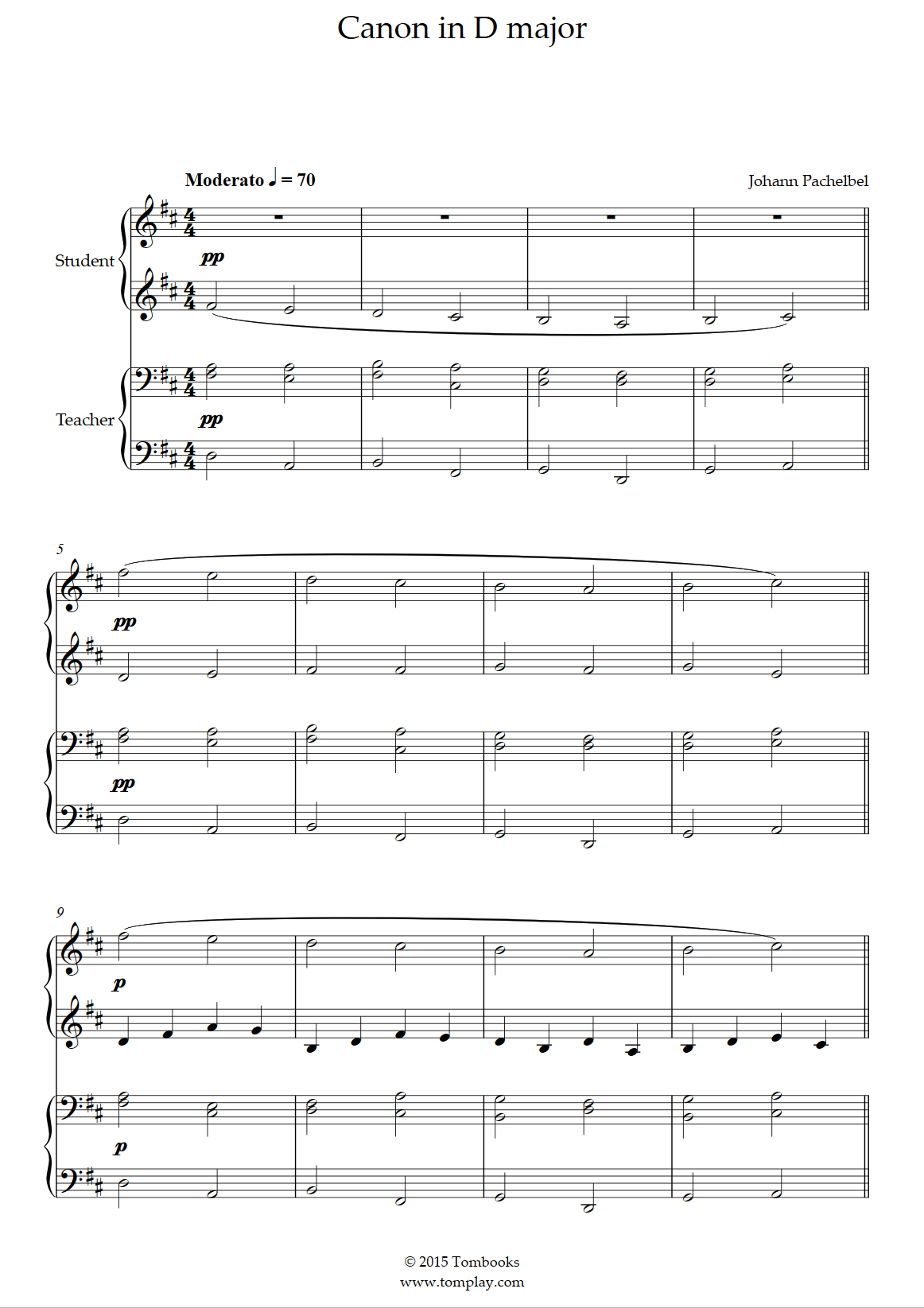
Canon in D Sheet Music: A Guide for Players
Johann Pachelbel’s Canon in D is one of the most recognizable pieces in classical music. Its graceful melody and steady harmonic pattern make it a popular choice for weddings, recitals, and personal practice. Because the piece is available in many arrangements, finding the right Canon in D sheet music starts with choosing a version that suits your instrument and experience level.
What to Look for in an Arrangement
The original work is written for three violins and basso continuo, but sheet music is available for piano, guitar, cello, flute, and many other instruments. Some arrangements preserve the original ensemble texture, while others adapt the piece for a solo player.
- Instrument: Choose an edition written for your instrument, or one specifically arranged for your instrument.
- Skill level: Beginner versions may simplify rhythms, hand positions, or ornamentation. Advanced editions may include more of the original violin lines or detailed accompaniment.
- Format: Look for standard notation, tablature, chord symbols, or a combination, depending on how you prefer to read music.
- Extras: Some editions include fingering, performance notes, lyrics, or accompaniment parts.
Understanding the Music
Canon in D is built around a repeating bass line and harmonic progression. In the original version, the bass pattern continues as the three violins enter one after another, weaving variations around the same musical foundation. This repeating structure gives the piece its steady, flowing character.
When studying the score, notice how the accompaniment supports the melody. In a piano arrangement, for example, the left hand often carries the repeating bass pattern while the right hand plays the melodic material. Listening for that relationship can make the music easier to understand and perform.
Tips for Practicing Canon in D
- Start slowly. Choose a comfortable tempo and focus on even timing before trying to match a recording.
- Learn the repeating pattern. Becoming familiar with the bass line or chord progression can help you anticipate what comes next.
- Practice in sections. Work through a few measures at a time, then connect the sections once they feel secure.
- Use a metronome. A steady pulse helps keep the repeating accompaniment consistent.
- Shape the phrases. Even though the harmony repeats, the melody can rise and fall. Pay attention to dynamics and phrasing so the performance feels expressive rather than mechanical.
Finding and Using Sheet Music
When searching for Canon in D sheet music, check that the edition matches your instrument, key, and playing level. Preview the first page when possible to confirm that the notation is clear and that the arrangement is appropriate for your needs.
Pachelbel’s original composition is in the public domain in many countries, but a modern arrangement, engraving, or recording may have separate copyright protection. Check the terms of the edition before copying, sharing, or performing it publicly.
A Lasting Favorite
From a simple solo arrangement to the original ensemble score, Canon in D offers musicians many ways to explore its elegant melody and recurring musical pattern. The right sheet music can make the piece approachable for a new player while giving experienced musicians plenty of room to refine their interpretation.
6 Benefits of Canon in D Sheet Music for Musicians of All Levels
- Available for many instruments and skill levels.
- Recognizable melody that is enjoyable to play.
- Repeating patterns make practice easier.
- Great for weddings, recitals, and performances.
- Arrangements range from simple to advanced.
- Helps develop timing, phrasing, and ensemble skills.
5 Drawbacks of Canon in D Sheet Music
- Popular arrangements can feel overplayed.
- Some editions simplify the original score.
- Difficult versions may challenge beginners.
- Print quality varies between editions.
- Arrangement licensing can limit copying.
Available for many instruments and skill levels.
One of the biggest advantages of Canon in D sheet music is its availability for many instruments and skill levels. Whether you play piano, violin, guitar, flute, or another instrument, you can find an arrangement that fits your needs. Beginner versions often simplify the notes and rhythms, while more advanced editions preserve greater detail from Pachelbel’s original composition, making the piece accessible to a wide range of musicians.
Recognizable melody that is enjoyable to play.
One of the biggest advantages of Canon in D sheet music is its instantly recognizable melody, which makes the piece especially enjoyable to play. Its graceful, familiar tune can be rewarding for beginners and experienced musicians alike, and hearing it come together as you practice adds to the sense of accomplishment.
Repeating patterns make practice easier.
One of the advantages of Canon in D sheet music is its repeating musical patterns, which make the piece easier to learn and practice. Once you become familiar with the recurring bass line and chord progression, you can anticipate what comes next and focus on timing, technique, and expression. This repetition also makes it easier to practice in short sections and build confidence as you connect them.
Great for weddings, recitals, and performances.
One of the best things about Canon in D sheet music is its versatility for special occasions and live performances. Its graceful melody and familiar sound make it a lovely choice for weddings, while its clear structure gives students and experienced musicians an appealing piece for recitals. Whether played solo or by an ensemble, it brings an elegant, memorable touch to the stage.
Arrangements range from simple to advanced.
One of the biggest advantages of Canon in D sheet music is the wide range of arrangements available. Beginners can start with simplified versions featuring easier rhythms, fewer notes, or basic accompaniment, while experienced musicians can explore more advanced editions that capture the original ensemble texture and intricate details. This makes the piece accessible to players at many skill levels and offers room to grow over time.
Helps develop timing, phrasing, and ensemble skills.
Playing Canon in D sheet music can help musicians build essential performance skills. Its steady repeating pattern encourages accurate timing, while the flowing melody offers practice in shaping phrases with expression. In ensemble settings, players also learn to listen closely, balance their parts, and stay together as the musical lines weave around one another.
Popular arrangements can feel overplayed.
One drawback of Canon in D sheet music is that many popular arrangements can feel overplayed. Because the piece is frequently chosen for weddings, recitals, and other special occasions, familiar versions may sound predictable to performers and listeners alike. A fresh arrangement, a thoughtful change in tempo, or a more personal interpretation can help make the music feel distinctive again.
Some editions simplify the original score.
Some editions of Canon in D simplify Pachelbel’s original score to make it easier to play, but that can mean losing some of the piece’s texture and detail. A simplified arrangement may omit the interweaving violin lines, alter the accompaniment, or reduce rhythmic and harmonic nuances. As a result, it may be less suitable for players who want to study or perform the work as closely as possible to the original.
Difficult versions may challenge beginners.
Some versions of “Canon in D” can be challenging for beginners, especially those that preserve the original arrangement or include complex rhythms, fast passages, and demanding fingerings. Choosing sheet music labeled for beginners can make the piece easier to learn and more enjoyable to play.
Print quality varies between editions.
Print quality can vary significantly between editions of Canon in D sheet music. Some copies have crisp notation, clear spacing, and sturdy paper, while others may feature faint printing, cramped notes, or blurry scans that are difficult to read. Before buying or printing an edition, preview a sample page when possible to make sure the score is legible and comfortable to use.
Arrangement licensing can limit copying.
One potential drawback of Canon in D sheet music is that licensing may limit how you can copy or share it. Although Pachelbel’s original composition is in the public domain in many places, a particular arrangement or edition may still be protected by copyright. Check its license before making copies for students, ensemble members, or personal use; you may need permission or additional copies.