
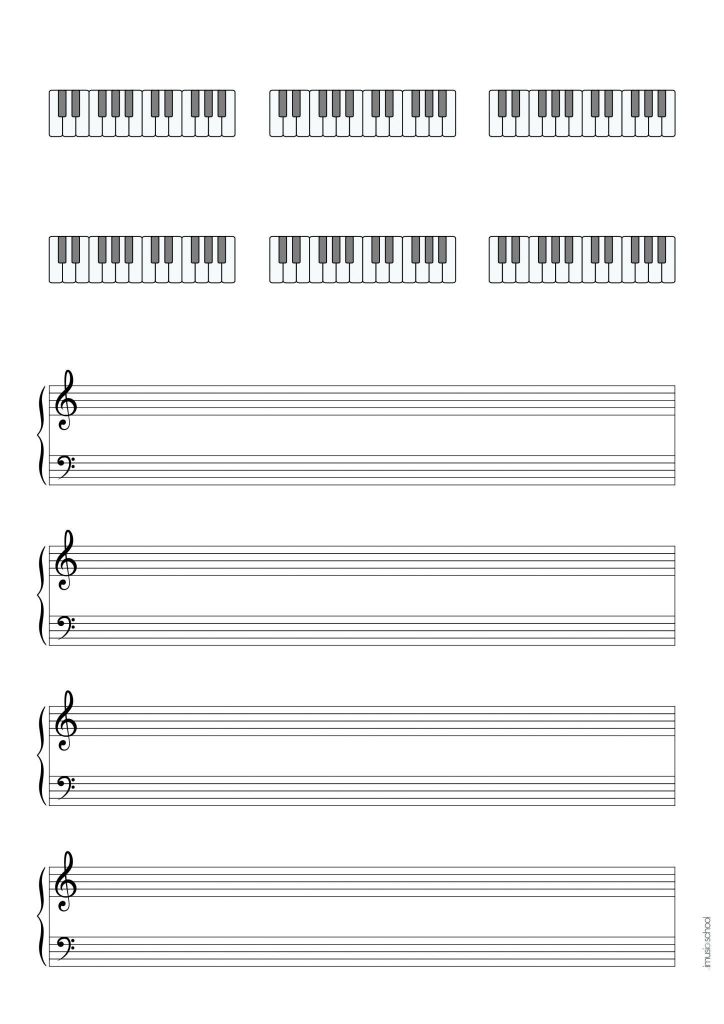
Blank Music Sheets: A Simple Tool for Writing and Learning Music
Blank music sheets give musicians a clear space to write melodies, harmonies, rhythms, and musical ideas. Whether you are learning to read notation, composing a song, arranging a piece, or teaching a music lesson, a blank page of staff paper can turn an idea into something you can see, hear, and share.
What Are Blank Music Sheets?
Blank music sheets are pages printed with empty staves—the sets of five horizontal lines used to write musical notes. Depending on the format, a page may include several staves, bar lines, a clef, or space for lyrics and chord symbols. Some sheets are completely empty, while others are designed for a specific instrument or style of music.
Blank staff paper is available in printed and digital formats. You can download and print pages for handwriting, or use a tablet or computer to write directly on a digital template.
Common Uses for Blank Sheet Music
- Composing: Write down melodies, bass lines, chord progressions, and complete arrangements.
- Music practice: Copy short musical passages to strengthen your reading and notation skills.
- Teaching: Create exercises for note reading, rhythm, scales, and harmony.
- Transcribing: Notate music you hear so it can be studied, rehearsed, or played by others.
- Songwriting: Pair musical notation with lyrics, chord names, and performance notes.
Choosing the Right Format
The best kind of blank music sheet depends on what you plan to write. Standard staff paper works well for many instruments and general music notation. Guitarists may prefer pages with tablature, while drummers often use percussion staff paper. Pianists can choose grand staff paper, which places treble and bass clefs together for writing music for both hands.
Consider the spacing, too. Wider staves leave more room for notes and markings, which can help beginners or composers working with detailed notation. More staves per page may be convenient for longer passages, but the writing area will be smaller.
How to Use Blank Music Sheets
- Choose a clef. Use a treble clef, bass clef, or another appropriate clef for the instrument and musical range.
- Set the key and time signatures. Add these near the beginning of the staff when they are needed.
- Mark the measures. Draw bar lines to divide the music into measures and make the rhythm easier to follow.
- Write the notes and rhythms. Place notes carefully on the lines and spaces, and add stems, flags, or beams to show their values.
- Add details. Include dynamics, tempo markings, lyrics, chord symbols, or other instructions that help explain how the music should be performed.
Tips for Clear, Readable Notation
Write notes large enough to distinguish their positions on the staff, and leave consistent space between measures. Keep stems and beams neat, and make sure accidentals are easy to see. If you are still developing your notation skills, start with short phrases rather than trying to fill a whole page at once.
It can also help to label a page with the piece’s title, date, instrument, and composer or songwriter. When revising, use a pencil or keep a separate clean copy of the music. For digital work, save versions as you make changes.
Printed or Digital?
Printed blank music sheets are convenient for lessons, practice, and quick musical sketches. They do not require a device, and many musicians find handwriting helpful when learning notation. Digital staff paper is easy to duplicate, resize, and store, and it can be useful when collaborating or preparing clean copies.
Both options work well. Choose the format that makes it easiest to capture your ideas and read them later.
A Blank Page for Your Next Musical Idea
Blank music sheets are a practical resource for beginners and experienced musicians alike. With the right layout and a little space to experiment, a blank staff can become a practice exercise, a memorable melody, or the first draft of a complete composition.
7 Essential Tips for Using Blank Music Sheets Effectively
- Choose staff paper with the right number of lines.
- Use wide spacing for complex passages.
- Keep blank sheets clean and crease-free.
- Write lightly before adding final notes.
- Label the clef and key signature clearly.
- Use larger staves for easier reading.
- Store extra sheets in a folder.
Choose staff paper with the right number of lines.
Choose staff paper with the right number of lines for your instrument and purpose. Standard music uses five-line staves, while piano music often needs a grand staff that combines treble and bass clefs. Guitar tablature, percussion, and other specialized parts may use different layouts. Picking the right format from the start gives you enough room to write clearly and makes your music easier to read and play.
Use wide spacing for complex passages.
When writing complex musical passages, use blank music sheets with wider spacing between the staves and measures. Extra room makes it easier to fit accidentals, detailed rhythms, lyrics, and performance markings without crowding the notes. Clear spacing also helps musicians read the passage accurately and makes later edits simpler.
Keep blank sheets clean and crease-free.
Keep blank music sheets clean and crease-free so they’re easy to read and ready whenever inspiration strikes. Store them in a folder or binder, and handle them with clean, dry hands to prevent smudges, stains, and damage.
Write lightly before adding final notes.
Write lightly before adding final notes so you can adjust notes, rhythms, and markings without leaving a cluttered page. Once you’re happy with the music, go over the notation more firmly or make a clean copy. This simple habit makes revisions easier and keeps your sheet music neat and readable.
Label the clef and key signature clearly.
Label the clef and key signature clearly at the beginning of each staff so you—and anyone reading your music—can quickly identify the notes and tonal center. Use the clef that fits the instrument or musical range, and write the key signature neatly after it, keeping accidentals in the correct order and position. Clear labels help prevent reading mistakes and make your blank music sheet easier to follow.
Use larger staves for easier reading.
Use larger staves when you want your music to be easier to read, write, and revise. The extra space makes notes, accidentals, and other markings clearer, which is especially helpful for beginners, detailed passages, or anyone who prefers less crowded notation.
Store extra sheets in a folder.
Keep extra blank music sheets in a folder so they stay clean, flat, and easy to find when inspiration strikes or practice begins. Choose a folder that fits the pages without folding them, and consider sorting sheets by type—such as standard staff paper, piano grand staff, or guitar tablature—so you can quickly grab the right format.