
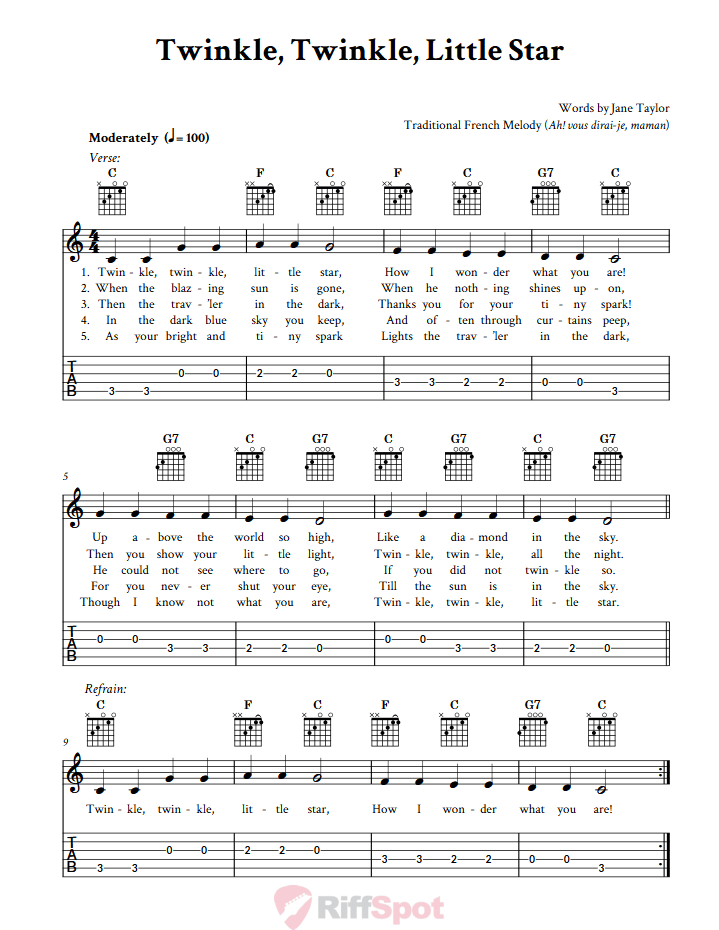
Twinkle Twinkle Sheet Music: A Beginner-Friendly Guide
“Twinkle, Twinkle, Little Star” is one of the most familiar songs in the world—and a favorite first piece for new musicians. Its simple melody, steady rhythm, and short phrases make it a welcoming introduction to reading music. Whether you’re looking for piano, guitar, violin, or voice sheet music, this classic tune offers an easy way to start practicing.
Why It’s a Great First Song
The melody uses a small range of notes and follows a memorable pattern. That makes it easier for beginners to connect what they see on the page with what they hear and play. The song also repeats musical ideas, giving learners a chance to practice the same notes and rhythms more than once.
For piano students, the melody can be played with one hand before adding simple chords or a second-hand accompaniment. Singers can use the tune to practice pitch and phrasing, while players of melody instruments can focus on reading notes and keeping a steady beat.
Choosing the Right Sheet Music
Sheet music editions can vary in key, arrangement, and difficulty. When choosing one, look for a version that matches your instrument and experience level. A beginner arrangement typically has a clear melody, a comfortable range, and few unfamiliar rhythms. More advanced versions may include chords, accompaniment, or decorative variations.
- Piano: Start with a melody-only arrangement, then try adding simple left-hand notes or chords.
- Guitar: Look for a version with chord symbols if you want to accompany singing.
- Violin and other melody instruments: Choose sheet music in a suitable key and range for the instrument.
- Voice: Select a version with lyrics and, if helpful, a piano or chord accompaniment.
Understanding the Melody
The song is based on a traditional French melody called “Ah! vous dirai-je, maman.” The English lyrics commonly sung today are associated with a poem by Jane Taylor, published in 1806. The melody’s repeated phrases make it useful for learning how musical patterns work: a phrase is introduced, repeated, and then developed into a satisfying ending.
Before playing, take a moment to check the time signature, key signature, and starting note in your edition. Clap or tap through the rhythm, then play the melody slowly. If the music includes lyrics, singing along can help you remember the tune and keep the phrasing natural.
Simple Practice Tips
- Start slowly. Focus on accurate notes and an even rhythm before increasing the tempo.
- Practice one phrase at a time. Repeat each short section until it feels comfortable, then connect the phrases.
- Watch the notes and listen. Notice whether the sound matches the melody you expect.
- Try a different arrangement. Once you can play the basic version, explore an accompaniment or a variation.
Finding and Using Sheet Music
“Twinkle, Twinkle, Little Star” is a traditional song, and its familiar melody is in the public domain. However, a particular arrangement, engraving, or recording may have its own copyright. Check the terms provided with any sheet music you download, especially if you plan to reproduce, distribute, or perform the arrangement publicly.
With an arrangement suited to your instrument and skill level, “Twinkle, Twinkle, Little Star” can be more than a first song. It’s a simple, enjoyable way to build musical confidence—and a tune that’s easy to share with others.
6 Tips for Playing “Twinkle, Twinkle, Little Star” Sheet Music
- Check the key signature before playing.
- Start slowly to learn the notes.
- Count the beats in each measure.
- Watch for repeated note patterns.
- Use finger numbers if provided.
- Practice one musical phrase at a time.
Check the key signature before playing.
Before you begin playing “Twinkle, Twinkle, Little Star,” check the key signature at the start of the staff. It shows which notes should be played sharp or flat throughout the piece, unless a natural sign changes them. Knowing the key in advance helps you choose the correct notes, avoid stopping to fix mistakes, and play the melody more smoothly.
Start slowly to learn the notes.
Start slowly when learning “Twinkle, Twinkle, Little Star” sheet music so you can focus on playing each note accurately. Take your time with the melody, and keep a steady rhythm rather than trying to match the song’s full speed right away. Once the notes feel comfortable, gradually increase the tempo while staying relaxed and listening carefully to your sound.
Count the beats in each measure.
Count the beats in each measure as you play “Twinkle, Twinkle, Little Star” to keep a steady rhythm and avoid rushing through the melody. Check the time signature at the beginning of the sheet music to see how many beats belong in each measure, then tap your foot or count aloud while practicing. Once the beat feels consistent, try playing the song again without counting aloud.
Watch for repeated note patterns.
Watch for repeated note patterns in “Twinkle, Twinkle, Little Star” sheet music. The melody repeats several phrases, so recognizing a pattern can help you read ahead, remember the notes, and play with greater confidence. Once you learn one phrase, look for where it appears again—and notice any small changes before the song ends.
Use finger numbers if provided.
If your “Twinkle, Twinkle, Little Star” sheet music includes finger numbers, use them as a guide for which fingers to play each note. Following the suggested fingering can make the melody easier to play smoothly and help you build good hand position. Once the notes feel familiar, try playing without looking at the numbers so you can focus more on reading the music.
Practice one musical phrase at a time.
When learning “Twinkle, Twinkle, Little Star,” practice one musical phrase at a time instead of trying to play the whole song at once. Work slowly through a short section until the notes and rhythm feel comfortable, then move on to the next phrase. Once each part is familiar, connect them and play the melody from beginning to end. This approach makes practice more manageable and helps you notice and correct mistakes.