
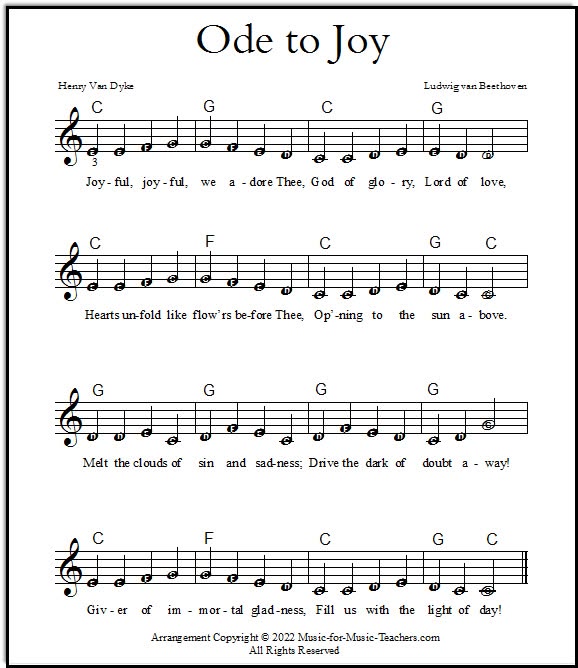
Ode to Joy Sheet Music: A Guide for Musicians
“Ode to Joy” is one of the most recognizable melodies in classical music. Composed by Ludwig van Beethoven, it appears in the final movement of his Symphony No. 9 and is often performed by solo musicians, choirs, and ensembles. Its memorable tune and steady rhythm make it a popular choice for learners and experienced musicians alike.
Choosing the Right Version
Ode to Joy sheet music is available in arrangements for many instruments, including piano, guitar, violin, flute, recorder, and voice. Before choosing an edition, check that it matches your instrument, skill level, and preferred key. Beginner arrangements often use a simplified melody and straightforward rhythms, while advanced versions may include fuller harmonies, accompaniment, or variations.
If you’re playing with other musicians, make sure everyone has compatible parts. A piano arrangement, for example, may provide accompaniment, while a vocal or instrumental part carries the melody.
What to Look for in Sheet Music
- Difficulty level: Look for clear guidance such as beginner, intermediate, or advanced.
- Key and range: Choose a version that suits your instrument and comfortable playing range.
- Arrangement details: Check whether the score includes accompaniment, lyrics, chord symbols, or performance notes.
- Readability: A well-formatted score with clear notation can make practice easier.
Tips for Learning the Melody
Start slowly and focus on playing the notes accurately before increasing the tempo. Break the melody into short phrases, and practice each section until the transitions feel comfortable. If the arrangement includes accompaniment, learn the melody on its own first, then add the supporting part.
Pay attention to rhythm and dynamics, too. Even a simple arrangement can sound expressive when the notes are played evenly and the musical phrases are shaped with care. A metronome can help you keep a steady pulse, especially when you’re just getting started.
Finding a Suitable Edition
You can find Ode to Joy sheet music through music stores, libraries, and reputable online sheet music services. Some versions are free, while others are sold as printed editions or digital downloads. Beethoven’s original composition is in the public domain in many countries, but a particular arrangement, engraving, or recording may still be protected by copyright. Check the rights information and terms of use before downloading, sharing, or performing an arrangement.
A Timeless Piece to Play and Share
Whether you’re learning your first melody or preparing an ensemble performance, Ode to Joy offers an approachable way to explore a celebrated work by Beethoven. With an arrangement that fits your instrument and level, you can enjoy the tune at home, in a lesson, or with fellow musicians.
9 Tips for Playing “Ode to Joy” Sheet Music with Confidence
- Check the key signature before you begin.
- Count the rhythm slowly at first.
- Mark the repeated melody phrases.
- Keep the left hand steady.
- Practice tricky measures one at a time.
- Start at a comfortable tempo.
- Watch for changes in dynamics.
- Use a metronome to build consistency.
- Play through the full piece after practicing sections.
Check the key signature before you begin.
Before you begin playing “Ode to Joy,” check the key signature at the start of the staff. It tells you which notes are consistently sharp or flat, helping you avoid wrong notes and understand the piece’s tonal center. Take a moment to identify the key and any accidentals in the music, especially if you’re using an arrangement that differs from the familiar version.
Count the rhythm slowly at first.
When learning “Ode to Joy,” count the rhythm slowly at first so you can play each note in time without rushing. Tap your foot or use a metronome to keep a steady beat, and increase the tempo gradually as the rhythm feels more comfortable.
Mark the repeated melody phrases.
Mark the repeated melody phrases in your “Ode to Joy” sheet music to make the piece easier to learn and remember. Use a pencil to circle or highlight recurring sections, then notice how they repeat with the same or slightly changed notes. Practicing these patterns together can help you recognize the structure, anticipate what comes next, and spend more time refining your rhythm and expression.
Keep the left hand steady.
Keep the left hand steady as you play “Ode to Joy” on the piano. Practice the accompaniment slowly, focusing on an even rhythm and consistent volume so it supports the melody without overpowering it. Once the left-hand part feels comfortable, add the right hand and gradually increase the tempo.
Practice tricky measures one at a time.
When learning “Ode to Joy,” practice tricky measures one at a time instead of playing through the entire piece repeatedly. Slow the measure down, check the notes and rhythm, and repeat it until it feels comfortable. Then practice it together with the measures before and after, so the transitions sound smooth.
Start at a comfortable tempo.
Start “Ode to Joy” at a comfortable tempo that lets you play each note clearly and keep a steady rhythm. There’s no need to rush—begin slowly, especially when learning a new passage, then gradually increase the speed as the notes feel more familiar. A metronome can help you build confidence and maintain an even pace.
Watch for changes in dynamics.
Watch for changes in dynamics as you play “Ode to Joy.” These shifts in volume help shape the melody and bring it to life, even in a simple arrangement. Notice markings such as piano (soft) and forte (loud), and adjust your playing gradually where the music calls for a change. If your sheet music has no dynamic markings, try gentle variations while keeping the melody clear and expressive.
Use a metronome to build consistency.
Use a metronome to build consistency as you practice “Ode to Joy.” Start at a comfortable, slow tempo so you can play each note and rhythm accurately, then gradually increase the speed as the melody becomes easier. Steady practice helps you keep an even beat, make smooth transitions between phrases, and feel more confident when playing the piece.
Play through the full piece after practicing sections.
After practicing “Ode to Joy” in smaller sections, play through the entire piece without stopping. This helps you connect the phrases, keep a steady tempo, and build confidence moving between parts. If you make a mistake, keep going and note the spot to revisit afterward—smooth, complete run-throughs are an important step toward a polished performance.