
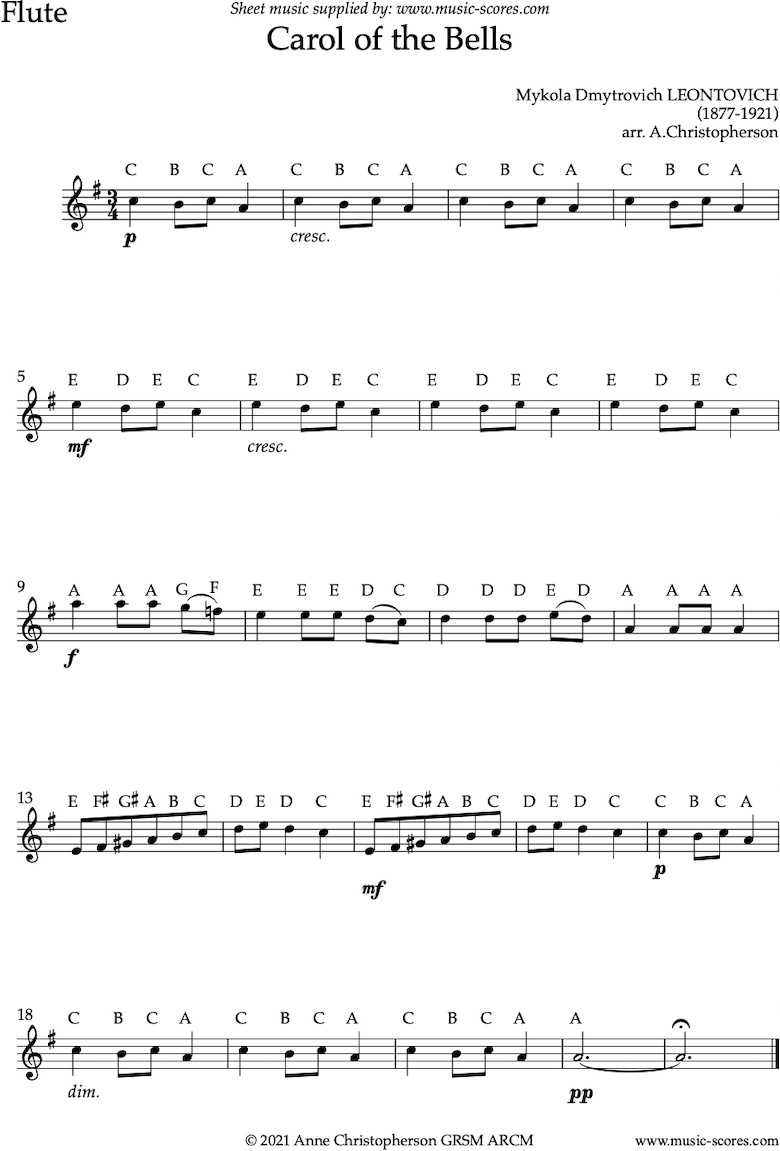
Flute Music Notes: A Beginner’s Guide
Learning to read flute music starts with recognizing the notes on the staff, understanding how they relate to the flute’s keys, and practicing how to produce a clear sound. The flute is a concert-pitch instrument, which means the note written on the page sounds at the same pitch when played.
The Musical Alphabet
Music uses seven letter names: A, B, C, D, E, F, and G. After G, the sequence starts again at A in the next octave. On the flute, each note can be played in different octaves, producing a lower or higher version of the same letter name.
Reading Notes on the Staff
Flute music is usually written in treble clef. The five lines of the treble-clef staff, from bottom to top, are E, G, B, D, and F. The spaces, also read from bottom to top, are F, A, C, and E.
Notes can also sit above or below the staff on small added lines called ledger lines. For example, middle C is commonly written on a ledger line just below the treble staff.
Flute Range
A standard concert flute’s commonly used written range begins at middle C (C4) and extends to C7. Some flutes with a B footjoint can play down to B3, and experienced players may perform notes above the usual range. The flute’s sound changes across its range: lower notes tend to be softer and warmer, while higher notes can sound brighter and more penetrating.
How Written Notes Connect to Fingering
Each note has a fingering made by opening and closing keys on the flute. The same note name may have different fingerings in different octaves, so players learn a fingering chart alongside music reading. Fingering alone does not determine the sound, however. Breath direction, air speed, and embouchure—the way the lips shape the air—also affect pitch and tone.
Beginners often start with notes such as B, A, and G, then add notes across the staff. These are common starting points, but the order varies by method book and teacher. A fingering chart can help identify the keys for a note, while a tuner can help check whether the pitch is accurate.
Sharps, Flats, and Natural Notes
A sharp raises a note by one half step, while a flat lowers it by one half step. A natural sign cancels a sharp or flat earlier in the measure. These symbols appear before a note, and they may change which keys the player uses. The key signature, shown near the beginning of a piece, indicates sharps or flats that generally apply throughout the music.
Tips for Practicing Flute Notes
- Say each note name aloud while following the music.
- Practice slowly, focusing on relaxed posture and steady breath.
- Use a fingering chart to check unfamiliar notes.
- Play scales to become comfortable moving between notes.
- Listen carefully and use a tuner to develop accurate pitch.
With regular practice, reading flute music becomes more familiar. Combining note reading, fingering, and breath control helps players move from individual notes to melodies with confidence.
8 Tips for Reading and Playing Flute Music Notes
- Learn the notes on the staff before practicing songs.
- Use a fingering chart to check unfamiliar notes.
- Keep fingers relaxed and close to the keys.
- Practice scales slowly to build note accuracy.
- Read rhythms along with the written notes.
- Use a tuner to check pitch as you practice.
- Mark tricky notes lightly in your sheet music.
- Repeat short passages until the notes feel easy.
Learn the notes on the staff before practicing songs.
Before practicing songs on the flute, take time to learn the notes on the staff. Knowing the note names and their positions in treble clef helps you recognize melodies more quickly, follow the music with confidence, and spend less time guessing which keys to press. Practice identifying notes one at a time, then try reading a simple scale or short exercise before moving on to a song.
Use a fingering chart to check unfamiliar notes.
When you come across an unfamiliar note in flute music, check a fingering chart to see which keys to press. Compare the note’s position on the staff with the chart, then practice the fingering slowly and listen for a clear, steady pitch. Over time, this habit helps you learn new notes and read music with greater confidence.
Keep fingers relaxed and close to the keys.
Keep your fingers relaxed and close to the keys when playing the flute. Tense fingers or wide movements can make it harder to switch notes smoothly and may slow down your playing. Let your hands rest naturally, curve your fingers gently, and lift each finger only as much as needed. With steady practice, this light, efficient motion can help you play more comfortably and accurately.
Practice scales slowly to build note accuracy.
Practice flute scales slowly to build note accuracy and confidence. Take time to form each note clearly, use the correct fingering, and listen for a steady, in-tune sound before moving on. As the notes become more consistent, gradually increase your tempo while keeping your tone relaxed and even.
Read rhythms along with the written notes.
Reading rhythms along with the written notes helps you understand both which pitches to play and how long to hold them. Before playing, look at the time signature and note values, then count the beat steadily as you follow the music. Start slowly, clapping or tapping the rhythm if needed, and gradually increase the tempo while keeping the notes and timing accurate.
Use a tuner to check pitch as you practice.
Use a tuner to check your pitch as you practice flute notes. It can show whether each note is sharp, flat, or in tune, helping you adjust your breath and embouchure. Start by holding a note steadily, then make small adjustments until the tuner registers the correct pitch. Regular checks can build good listening habits and help you play more confidently in tune.
Mark tricky notes lightly in your sheet music.
Mark tricky notes lightly in your sheet music to make them easier to spot during practice. You might circle an unfamiliar note, jot down its name, or add a small reminder of its fingering. Keep your markings neat and easy to erase so they don’t clutter the page or distract you once the note feels familiar. Over time, try playing the passage without relying on the reminders to build confidence reading the music on your own.
Repeat short passages until the notes feel easy.
Repeat short passages until the notes feel easy and natural to play. Working on a few measures at a time helps you focus on note names, fingerings, and smooth transitions without feeling overwhelmed. Start slowly, then gradually increase the tempo while keeping each note clear and steady.