
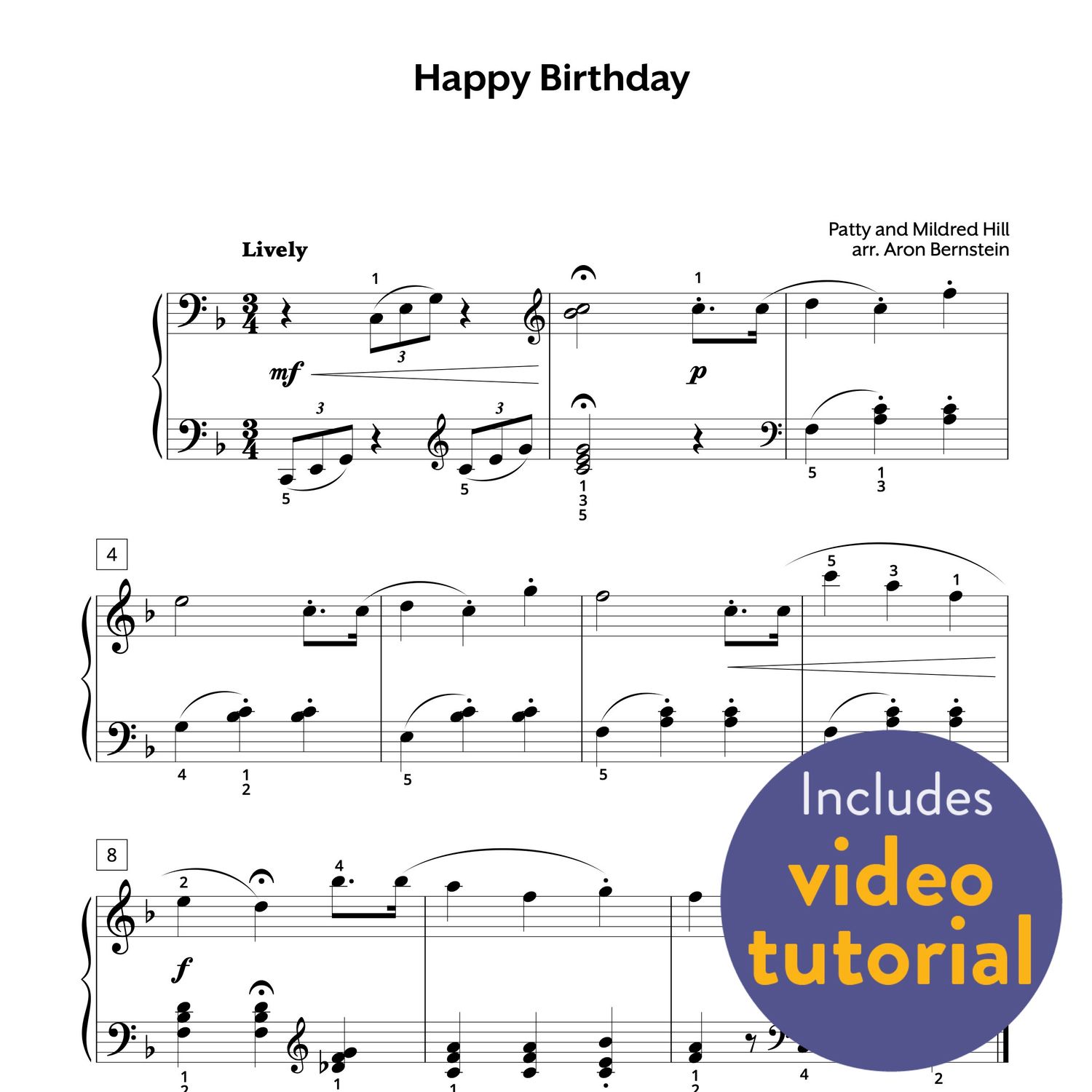
Happy Birthday Score: A Simple Guide to the Celebrated Song
A “Happy Birthday” score is one of the most familiar pieces of sheet music in the world. Its short melody is easy to recognize, and its straightforward structure makes it a popular choice for beginner musicians, music teachers, and anyone who wants to add a personal touch to a birthday celebration.
What’s on a Happy Birthday Score?
A standard score typically shows the melody in musical notation, along with lyrics and a time signature. The song is often written in a beginner-friendly key, though the key and arrangement can vary. Some versions include chord symbols for guitar or piano, while others provide a simple melody line suitable for voice, flute, violin, or another instrument.
The tune is commonly taught in 3/4 time, giving it a gentle, waltz-like feel. Because the melody uses a small range of notes and a repeating phrase, it can be a useful first song for learning pitch, rhythm, and note reading.
Choosing an Arrangement
The best score depends on who will perform it and how. A basic melody score works well for a solo instrument or group sing-along. Piano arrangements may include left-hand accompaniment, while guitar sheets often show chord names above the lyrics. More advanced versions can add harmonies, introductions, rhythmic variations, or instrumental flourishes.
- For beginners: Look for a score with large, clear notation and few accidentals.
- For singers: Choose a key that suits the group’s vocal range.
- For piano: Pick an arrangement that matches the player’s level, from melody-only to full accompaniment.
- For a group: Consider a version with chords or separate parts for multiple instruments.
Tips for Playing the Song
Before performing, check the score’s key and starting pitch. If the song feels too high or too low for the singer, transpose it to a more comfortable key. Keep the tempo relaxed enough for everyone to follow, and pay attention to the final phrase so the ending feels clear rather than rushed.
For a simple accompaniment, a pianist can play the melody with the right hand and steady chords with the left. Guitarists can strum the chords gently, leaving space for the voices. Even a small change—such as a short instrumental introduction or a quiet final cadence—can make a familiar performance feel special.
Finding and Using Sheet Music
Happy Birthday scores are available in many formats, including printable sheet music, digital notation, and beginner lesson materials. Check that the arrangement is suitable for your instrument and that the notation is legible. When sharing or performing a particular edition, review the publisher’s terms and any applicable licensing information; rights can differ for arrangements, recordings, and printed editions.
A Small Song for a Big Moment
Its melody may be simple, but “Happy Birthday” brings people together in a memorable way. A score makes it easy to adapt the song for a solo performance, a family sing-along, or a larger celebration. With the right key, arrangement, and tempo, musicians of nearly any skill level can make the birthday moment their own.
7 Essential Tips for Mastering the ‘Happy Birthday’ Score
- Check the key signature before playing.
- Count the pickup notes carefully.
- Keep a steady tempo.
- Watch for repeated notes and phrases.
- Use simple dynamics to build excitement.
- Practice difficult intervals slowly.
- End together with a confident final note.
Check the key signature before playing.
Before playing a “Happy Birthday” score, check the key signature—the sharps or flats shown at the beginning of each staff. It tells you which notes should be played higher or lower throughout the piece, unless marked otherwise. Knowing the key signature helps you avoid wrong notes and makes the melody sound smoother.
Count the pickup notes carefully.
Count the pickup notes carefully when reading a “Happy Birthday” score. The melody often begins with a short upbeat before the first full measure, so those notes may not fill an entire bar. Notice where the pickup falls in the beat, then keep a steady pulse as you move into the next measure. Counting it correctly helps the melody start smoothly and keeps the singer or ensemble together.
Keep a steady tempo.
When playing a “Happy Birthday” score, keep a steady tempo so everyone can follow along and sing together. Start at a comfortable pace, count the beat quietly if needed, and avoid speeding up as the song builds. A consistent rhythm helps the melody feel smooth and gives the birthday guest plenty of time to enjoy the moment.
Watch for repeated notes and phrases.
When reading a “Happy Birthday” score, watch for repeated notes and phrases—they make the melody easier to learn and help you keep your place. Notice which sections return, and practice them until they feel familiar. Repeated notes should stay even and steady, while each phrase should flow naturally into the next.
Use simple dynamics to build excitement.
Use simple dynamics to build excitement when playing “Happy Birthday.” Start softly, then gradually get louder as the song continues, saving the fullest sound for the final line or the birthday person’s name. This gentle rise in volume adds warmth and anticipation without making the tune difficult to play. Keep the changes natural so everyone can still sing along comfortably.
Practice difficult intervals slowly.
Practice difficult intervals slowly to help your ear and fingers adjust to the distance between notes. Play each pair of notes separately, listen carefully to the pitch, and repeat it at a comfortable tempo before adding it back into the “Happy Birthday” melody. Once the interval feels accurate and relaxed, gradually increase the speed while keeping the notes clear.
End together with a confident final note.
End “Happy Birthday” together with a confident final note by watching the group, holding the last note for its full value, and releasing it at the same time. A clear cue—such as a small hand gesture or a shared breath—helps everyone finish in sync and gives the song a polished, celebratory ending.