
Twinkle Twinkle Little Star Sheet Music: A Beginner’s Guide
“Twinkle, Twinkle, Little Star” is one of the most familiar songs for beginning musicians. Its simple melody, repeated phrases, and steady rhythm make it a popular first piece for piano, keyboard, recorder, and other instruments. With a copy of the sheet music and a little practice, new players can learn to recognize the notes and play the tune step by step.
The melody in C major
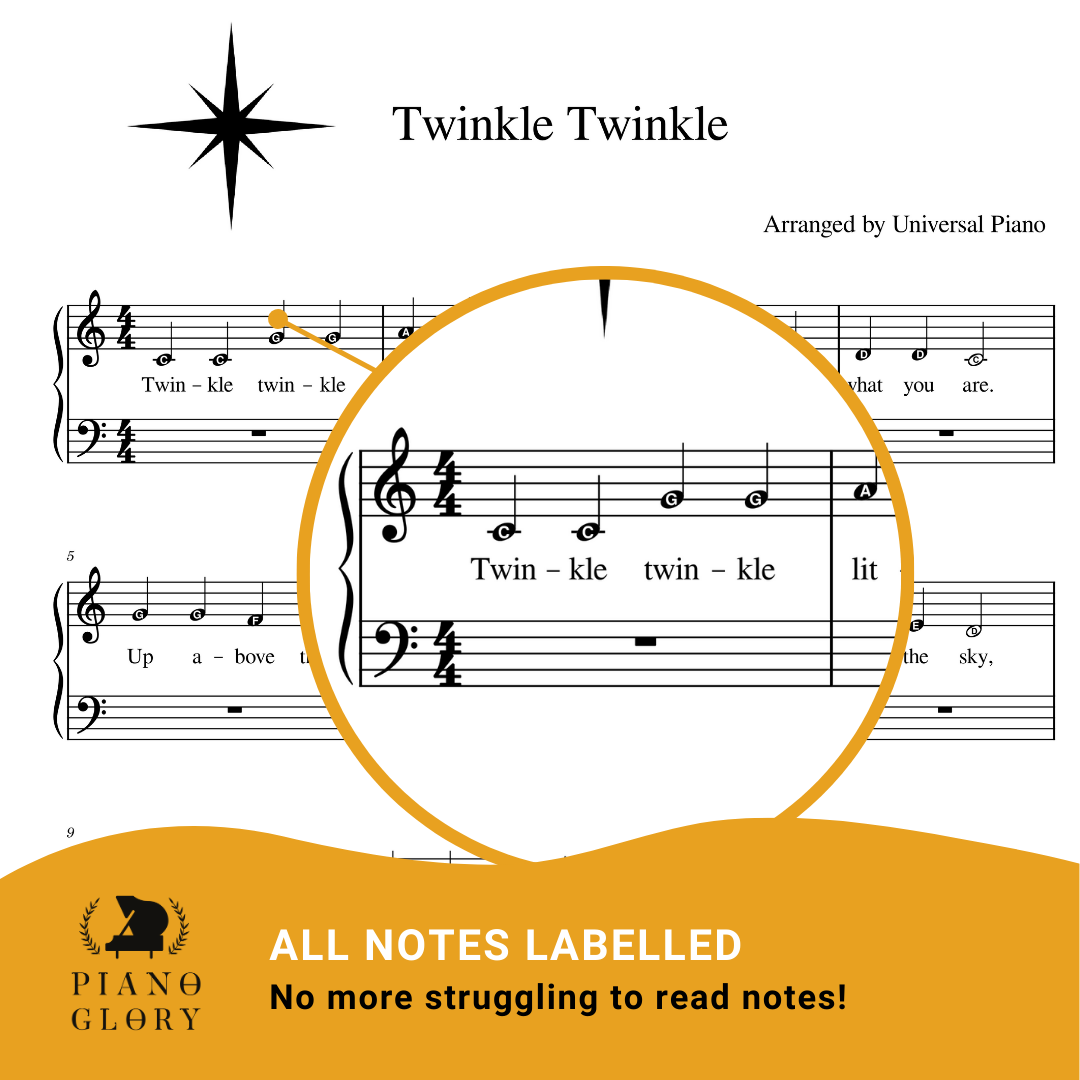
A common beginner arrangement uses the key of C major, which has no sharps or flats. The melody begins on C and moves mostly by step or by a small leap. In letter names, the first line is:
C C G G A A G
The tune continues:
F F E E D D C
These two phrases form the song’s familiar opening. The melody then repeats a similar pattern before returning to the opening notes. The final note of each phrase is often held longer than the preceding notes, giving the song its gentle, settled feel.
Understanding the rhythm
Many beginner versions are written in 4/4 time. In a simple arrangement, most notes last one beat, while the last note of a phrase may last two beats. Count steadily as you play, and give the longer notes enough time to ring before moving on. Sheet music editions can differ in note values, tempo, and accompaniment, so follow the markings on the particular version you are using.
How to read the sheet music
On piano, the melody is often written in the treble clef for the right hand. The five lines of the treble staff represent E, G, B, D, and F from bottom to top; the spaces represent F, A, C, and E. A key signature with no sharps or flats usually indicates C major or A minor. Check the time signature and note shapes before playing so you know how to count each measure.
Tips for learning the song
- Learn one phrase at a time. Practice the first line slowly, then add the next phrase.
- Say the note names aloud. This can help connect the written notes to the instrument.
- Keep a steady beat. Use a slow count or metronome, especially when holding the longer notes.
- Practice hands separately. If the arrangement includes chords or a left-hand part, learn each hand on its own before combining them.
- Check the edition. Easy arrangements may use different keys, fingerings, or accompaniment patterns.
A song with a long history
The melody is based on the traditional French tune “Ah! vous dirai-je, maman,” which was published in the 18th century. The English lyrics commonly sung today are also traditional. The tune’s straightforward structure has inspired many arrangements, including versions for solo instruments, piano, and ensembles.
Choosing a version
Beginners may prefer a large-print score with note names, finger numbers, or a simplified accompaniment. More experienced players can look for arrangements with chords, variations, or a different key. When downloading or printing sheet music, check the edition’s usage terms and make sure it suits your instrument and skill level.
Whether played as a first piano piece or arranged for a group, “Twinkle, Twinkle, Little Star” offers a friendly introduction to melody, rhythm, and reading music.
“Twinkle, Twinkle, Little Star” Sheet Music: 7 Frequently Asked Questions
- Where can I find free sheet music for “Twinkle, Twinkle, Little Star”?
- What are the piano notes for “Twinkle, Twinkle, Little Star”?
- What key is “Twinkle, Twinkle, Little Star” usually played in?
- Is “Twinkle, Twinkle, Little Star” easy for beginners to play?
- Can I get “Twinkle, Twinkle, Little Star” sheet music with letter names?
- What instruments can play “Twinkle, Twinkle, Little Star”?
- Is “Twinkle, Twinkle, Little Star” sheet music in the public domain?
Where can I find free sheet music for “Twinkle, Twinkle, Little Star”?
Free sheet music for “Twinkle, Twinkle, Little Star” is available from sites such as IMSLP and beginner-music libraries, including 8notes and MakingMusicFun. Search for the version that fits your instrument and skill level—some editions include note names, fingerings, or accompaniment. The traditional melody and lyrics are in the public domain, but newer arrangements may be copyrighted, so check each score’s license and terms before downloading, sharing, or performing it.
What are the piano notes for “Twinkle, Twinkle, Little Star”?
For a simple version in C major, the piano notes for “Twinkle, Twinkle, Little Star” are C C G G A A G, followed by F F E E D D C. Repeat the pattern for “Up above the world so high, like a diamond in the sky,” then finish with C C G G A A G and F F E E D D C. Play one note at a time with your right hand, keeping a steady beat and holding the last note of each phrase a little longer.
What key is “Twinkle, Twinkle, Little Star” usually played in?
“Twinkle, Twinkle, Little Star” is often played in C major, a beginner-friendly key with no sharps or flats. However, sheet music arrangements may use other keys to suit a particular instrument, singer, or skill level, so check the key signature on your version.
Is “Twinkle, Twinkle, Little Star” easy for beginners to play?
Yes. “Twinkle, Twinkle, Little Star” is generally easy for beginners because its melody is short, familiar, and built from a small number of notes with a steady rhythm. Many sheet music versions use a simple key, such as C major, and include note names or finger numbers to make learning easier. Start slowly, practice one phrase at a time, and choose an arrangement that matches your instrument and skill level.
Can I get “Twinkle, Twinkle, Little Star” sheet music with letter names?
Yes, beginner-friendly “Twinkle, Twinkle, Little Star” sheet music is available with letter names printed above or inside the notes. These labels can help you match the written music to the keys on a piano or keyboard while you learn the melody. For an extra challenge, choose a version without letter names as your note-reading skills improve, or use the labeled copy as a guide rather than relying on it for every note.
What instruments can play “Twinkle, Twinkle, Little Star”?
“Twinkle, Twinkle, Little Star” can be played on many instruments, including piano, keyboard, guitar, ukulele, violin, flute, recorder, clarinet, trumpet, and cello. Its simple melody is easy to adapt for solo performances, beginner lessons, or ensembles, and sheet music is available in different keys and arrangements to suit various instruments and skill levels.
Is “Twinkle, Twinkle, Little Star” sheet music in the public domain?
Yes. The traditional melody of “Twinkle, Twinkle, Little Star” and Jane Taylor’s original lyrics, published in 1806, are in the public domain in the United States. However, a particular sheet music edition may include a newer arrangement, harmonization, illustrations, or editorial material that is copyrighted. Check the edition’s copyright notice and use a public-domain score if you need a version you can freely copy or adapt.