
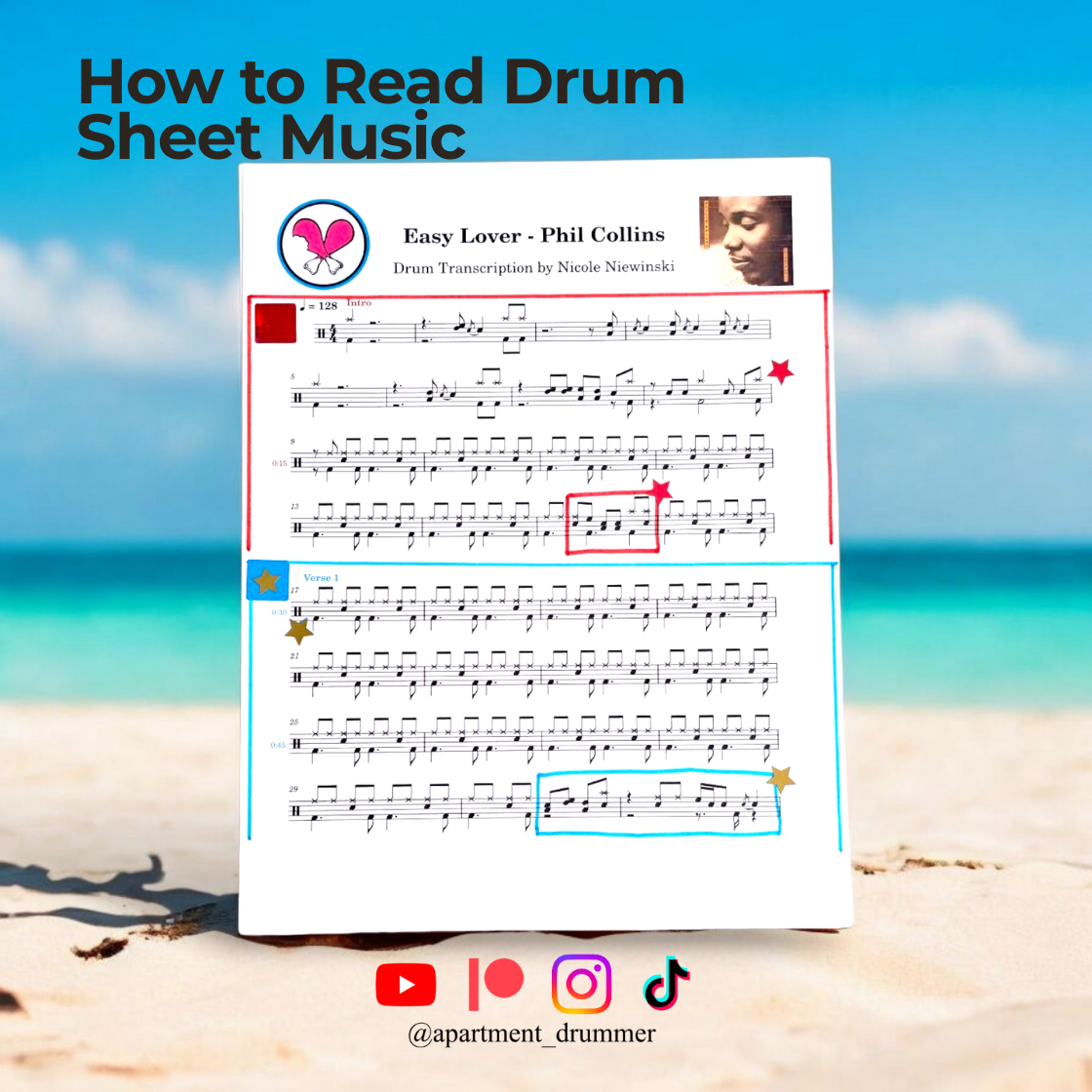
Drum Sheet Music: A Guide for Beginners and Experienced Drummers
Drum sheet music is a written way to show the rhythms, patterns, and musical details a drummer plays. It can help musicians learn songs, communicate with bandmates, and explore new styles. Whether you are picking up drumsticks for the first time or expanding your repertoire, understanding basic notation makes it easier to turn written notes into music.
What Is Drum Sheet Music?
Drum sheet music, often called drum notation, uses a staff to represent the different parts of a drum kit. Unlike notation for a pitched instrument, most drum-kit notes do not indicate a specific melody. Instead, their position on the staff identifies an instrument or sound, such as the snare drum, bass drum, or hi-hat.
The exact placement of drum notes can vary between publishers and arrangements. A notation key or legend usually identifies which staff position corresponds to each instrument. Check this key before playing, especially when moving between different books or websites.
Understanding the Basics
The Staff and Clef
Drum parts are commonly written on a five-line staff. Percussion notation may use a neutral clef rather than the treble or bass clef used for instruments with definite pitches. Notes are placed on lines and spaces to distinguish between the components of the kit.
Note Values and Rests
Note shapes show how long a sound lasts in relation to the beat. Whole, half, quarter, and eighth notes are among the most common values, while rests indicate moments of silence. Smaller values, such as sixteenth notes, are often used for faster fills and detailed grooves.
Time Signatures and Measures
A time signature appears near the beginning of a piece. The top number tells how many beats are in each measure, while the bottom number identifies the note value that receives one beat. For example, 4/4 time has four quarter-note beats per measure and is common in rock, pop, and many other styles.
Common Drum Symbols
Drum notation may use different noteheads to distinguish sounds. An “X” notehead often represents a cymbal or hi-hat, while a standard oval notehead may indicate a drum. These conventions are not universal, so the chart’s legend is the best guide.
- Hi-hat: Often shown with an X-shaped notehead.
- Snare drum: Usually written on a designated middle staff position.
- Bass drum: Commonly placed lower on the staff.
- Ride and crash cymbals: Often shown above the staff with X-shaped noteheads.
- Open hi-hat: May be marked with a small circle above the note.
How to Read a Drum Groove
Many drum parts show several instruments playing at the same time. A basic rock groove, for example, might place steady eighth notes on the hi-hat, the snare on beats two and four, and the bass drum on beats one and three. Notes aligned vertically are played together.
Start by identifying the time signature and tempo, then look for repeated patterns. Count the rhythm aloud before playing it. If the music uses subdivisions, count “and” between the beats for eighth notes or use a consistent sixteenth-note count. A metronome can help keep the pulse steady.
Tips for Practicing with Drum Sheet Music
- Read the notation key first. Confirm how the arrangement labels each part of the kit.
- Count before playing. Speak or tap through the rhythm to understand its timing.
- Practice slowly. Begin at a comfortable tempo and increase the speed gradually.
- Work on one layer at a time. Practice the hi-hat, snare, and bass drum separately before combining them.
- Use a metronome. A steady pulse helps develop timing and makes difficult passages easier to assess.
- Mark challenging sections. Note fills, repeats, dynamics, and changes in tempo so they are easy to find.
Choosing Drum Sheet Music
Choose arrangements that match your current experience and the type of music you want to play. Beginner charts often use straightforward grooves and clearly labeled parts. More advanced scores may include detailed fills, dynamics, articulations, and changes in meter.
When searching for music online, look for a clear notation key and a reliable source. Make sure the arrangement is intended for drums, rather than a general rhythm or percussion part. If a song is protected by copyright, use an authorized edition or a properly licensed resource.
Why Drum Notation Is Worth Learning
Learning to read drum sheet music builds rhythmic accuracy and makes unfamiliar music easier to approach. It also helps drummers share ideas with other musicians and prepare for rehearsals, recordings, and performances. Notation is not a substitute for listening, but combining the written part with the recording can provide a clearer understanding of how the music should feel.
With consistent practice, drum sheet music becomes less like a code and more like a map. Start with simple rhythms, pay attention to the notation key, and build toward more complex patterns one measure at a time.
Drum FAQs: Reading Sheet Music, Drumhead Basics, and ADHD Benefits
- Is drum sheet music hard to read?
- What is the sheet on a drum called?
- Is it hard to read drum sheet music?
- What is drum sheet music called?
- Is drum good for ADHD?
Is drum sheet music hard to read?
Drum sheet music can look unfamiliar at first, but the basics are usually straightforward to learn. The notes show which drums or cymbals to play and when to play them, while the time signature and note values explain how the rhythm is organized. Starting with simple beats, counting aloud, and practicing slowly can make reading drum notation much easier.
What is the sheet on a drum called?
The written music for a drum part is commonly called drum sheet music, drum notation, or a drum chart. A full arrangement for multiple instruments may be called a score, while a drummer’s part in that arrangement is often called the drum part. Drum notation uses symbols and staff positions to show which drums or cymbals to play and when.
Is it hard to read drum sheet music?
Reading drum sheet music can feel challenging at first, but the basics are easy to learn with practice. Start by understanding the staff, note values, time signature, and notation key, which shows where each drum or cymbal appears on the page. Begin with simple grooves, count the rhythm aloud, and practice slowly with a metronome. As you become familiar with the symbols and patterns, reading drum music will feel more natural.
What is drum sheet music called?
Drum sheet music is commonly called drum notation or drum tablature, though “drum tabs” usually refers to a simpler, less standardized way of showing rhythms and drum parts. Formal drum notation uses a musical staff to indicate which kit pieces to play and when, with a legend explaining the symbols.
Is drum good for ADHD?
Drumming can be an enjoyable and helpful activity for some people with ADHD because it combines movement, rhythm, listening, and focus. Practicing may offer a structured way to channel energy and build timing or coordination, but experiences vary, and drumming is not a treatment or substitute for professional care. A teacher or music therapist can help adapt lessons to someone’s needs.