
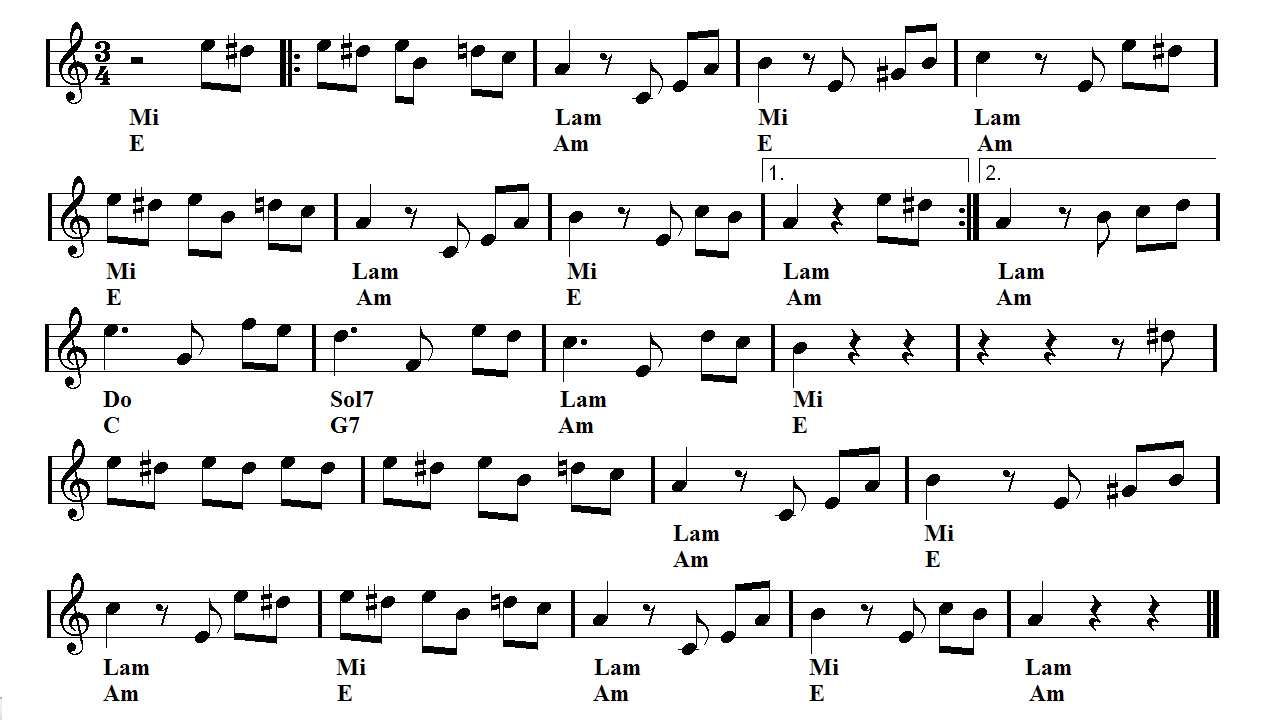
Für Elise Score: A Guide to Beethoven’s Beloved Piano Piece
The Für Elise score is one of the most recognizable pieces in piano music. Its delicate opening melody is familiar even to people who have never studied classical music, and it remains a popular choice for pianists learning to read notation and shape a musical phrase.
About the Piece
Known formally as Bagatelle No. 25 in A minor, Für Elise is attributed to Ludwig van Beethoven and cataloged as WoO 59. The piece was published after Beethoven’s death. Its famous opening is gentle and lyrical, while the contrasting passages bring greater motion and intensity.
The work is commonly described as a rondo-like piece: the opening theme returns between contrasting sections. These shifts in character make the score an enjoyable study in musical contrast, as well as a memorable performance piece.
What to Look for in the Score
The opening theme is built around a repeated-note figure and a graceful melody in the right hand, supported by accompaniment in the left. The music is centered in A minor, though it moves through other keys and tonal areas as the piece develops. A score may also include accidentals, dynamic markings, phrasing, and pedal suggestions that help shape the sound.
Different editions can vary in layout, fingering, and editorial markings. When choosing a score, look for a clearly printed edition that suits your level. Beginner editions may include finger numbers and simplified notation, while standard editions preserve Beethoven’s original notes and provide fewer learning aids.
Tips for Learning “Für Elise”
- Start slowly. Learn the opening melody at a comfortable tempo before trying to play it at performance speed.
- Practice hands separately. Get comfortable with the right-hand melody and left-hand accompaniment before combining them.
- Watch the accidentals. Sharps and other altered notes can be easy to miss, especially when they occur away from the opening theme.
- Use consistent fingering. Follow the fingering in your edition or settle on a reliable pattern with your teacher.
- Shape the phrases. Keep the opening light and expressive, and make the contrasting sections sound different in energy and volume.
- Build up difficult sections gradually. Practice short passages, then connect them once each feels secure.
Finding a “Für Elise” Score
Because Beethoven’s music is in the public domain, many editions of the score are available through music stores, libraries, and public-domain music archives. Check the edition details before downloading or purchasing: arrangements can differ from the original, and some modern editions may include copyrighted editorial content.
Whether you are a beginner learning the iconic opening or an experienced pianist refining the complete piece, the Für Elise score offers a rewarding way to explore melody, technique, and musical expression.
8 Essential Tips for Mastering the ‘Für Elise’ Score
- Check the key signature before playing.
- Notice the A minor tonality.
- Practice the opening right-hand motif slowly.
- Keep the left-hand accompaniment light.
- Watch for changes in dynamics.
- Use the pedal sparingly.
- Count carefully through the pauses.
- Learn difficult measures hands separately.
Check the key signature before playing.
Before playing the “Für Elise” score, check the key signature so you know which notes are sharp or flat throughout the piece. “Für Elise” is in A minor, which has no sharps or flats in its key signature, but accidentals appear in the music and change certain notes temporarily. Noticing these markings early can help you avoid wrong notes and play the melody more confidently.
Notice the A minor tonality.
Notice that “Für Elise” is centered on A minor, which gives the piece its delicate, slightly wistful character. As you read the score, look for the notes and accidentals that establish this tonality, and listen for how the music moves through other keys before returning to its familiar opening melody. Understanding A minor can help you recognize the piece’s harmonic shape and play its phrases with greater expression.
Practice the opening right-hand motif slowly.
Practice the opening right-hand motif slowly, focusing on even timing, clear notes, and relaxed fingers. Start at a tempo that lets you play each note accurately, then gradually increase the speed as the melody feels more comfortable. This careful approach helps the familiar opening sound smooth and expressive rather than rushed.
Keep the left-hand accompaniment light.
Keep the left-hand accompaniment light so it supports the melody without overpowering it. Practice with a relaxed touch and steady rhythm, listening for a balanced sound between both hands. This helps the right-hand tune stand out and gives “Für Elise” its graceful, delicate character.
Watch for changes in dynamics.
Watch for changes in dynamics as you practice the Für Elise score. The piece moves between softer, delicate passages and louder, more dramatic sections, so pay attention to markings such as piano (soft) and forte (loud). These contrasts help bring out the music’s expressive character; avoid playing every note at the same volume.
Use the pedal sparingly.
Use the pedal sparingly when playing the “Für Elise” score to keep the melody clear and expressive. Too much sustain can blur the quick notes and make the harmony sound muddy, especially in the opening. Lift and change the pedal with the harmony, and practice without it first so you can hear the notes and phrasing clearly.
Count carefully through the pauses.
Count carefully through the pauses in the Für Elise score so the melody stays steady and expressive. Even when your hands are silent, keep an internal pulse rather than rushing ahead or waiting too long to re-enter. Practicing slowly with a metronome can help you feel the timing and make each pause sound intentional.
Learn difficult measures hands separately.
When practicing the difficult measures in the “Für Elise” score, work on each hand separately before playing them together. This lets you focus on the notes, fingering, and rhythm in one part at a time without feeling overwhelmed. Once each hand feels comfortable, combine them slowly, keeping a steady tempo and repeating the passage until it feels smooth and controlled.