
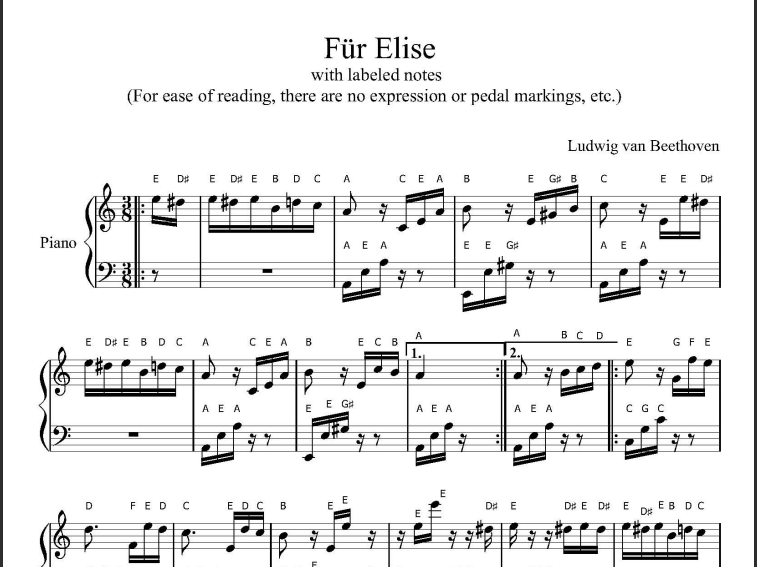
Fur Elise Sheet Music: A Guide for Pianists
“Für Elise” is one of Ludwig van Beethoven’s best-known piano pieces. Its instantly recognizable opening makes it a popular choice for beginners and experienced pianists alike. Whether you are learning the melody for the first time or polishing a complete performance, choosing the right Fur Elise sheet music can make a big difference.
About “Für Elise”
Often identified as Bagatelle No. 25 in A minor, “Für Elise” is cataloged as WoO 59. Beethoven composed the piece in the early 19th century, and it was published in 1867, decades after his death. The familiar opening alternates between E and D-sharp before moving through a graceful, flowing melody.
The piece is commonly written in 3/8 time. Although its opening may sound simple, the full work includes faster passages, changes in mood, and sections that require careful coordination between the hands.
Choosing the Right Sheet Music
Sheet music editions can vary in layout, fingering, and difficulty. Before downloading or purchasing a score, consider your experience level and what you want to learn.
- Beginner arrangements: These may simplify rhythms, shorten the piece, or use letter names and finger numbers to help new readers.
- Standard editions: These generally include the complete piece in its original key, with both hands written in standard notation.
- Annotated editions: These may include suggested fingering, dynamics, phrasing, and practice guidance.
- Digital scores: These are convenient for viewing on a tablet or printing, but check that the notes and page layout are clear and complete.
Many of Beethoven’s original works are in the public domain, but the copyright status of a particular edition may differ. Modern arrangements, editorial additions, and recordings can have their own rights. Check the terms provided by the publisher or source before sharing or reusing a score.
What Makes the Piece Challenging?
The opening theme is often the first part pianists learn, but the entire piece presents several musical and technical challenges. The right hand must play lightly and evenly, while the left hand supports the melody without overpowering it. Later sections introduce quicker notes and wider movement across the keyboard.
Accidentals also deserve attention. The D-sharp in the opening phrase is essential to the piece’s distinctive sound, and pianists should watch for changes in notes throughout the score. Reading the notation carefully is more reliable than depending on memory alone.
Tips for Learning “Für Elise”
- Start with a manageable section. Learn a few measures at a time rather than trying to play the entire piece at once.
- Practice each hand separately. This helps build confidence with the melody and accompaniment before combining them.
- Use a slow, steady tempo. Gradually increase the speed only when the notes and rhythm feel secure.
- Mark difficult passages. Fingering suggestions and small practice notes can make repeated work more focused.
- Pay attention to dynamics. The piece should have shape and contrast, not just accurate notes.
- Listen while following the score. A reliable recording can help with phrasing and overall structure, but it should support—not replace—reading the music.
Find Sheet Music That Fits Your Goals
The best “Für Elise” sheet music is an edition that matches your reading level and includes the amount of guidance you need. Beginners may benefit from a simplified arrangement, while pianists ready for a greater challenge can work from a complete score. With patient practice and attention to musical expression, this familiar melody can become a rewarding piece to play.
Mastering ‘Fur Elise’: 7 Essential Tips for Perfecting the Sheet Music
- Check the key signature
- Count the 3/8 rhythm evenly.
- Learn the opening motif slowly.
- Follow the printed fingerings when helpful.
- Watch for frequent accidentals.
- Practice each section hands separately.
- Use pedal lightly to keep notes clear.
Check the key signature
Before you start playing “Für Elise,” check the key signature and look for accidentals in the score. The piece is in A minor, which has no sharps or flats in its key signature, but the familiar opening includes a D-sharp that gives the melody its distinctive sound. Watching for that sharp—and any other accidentals—will help you play the notes accurately and understand how the melody is written.
Count the 3/8 rhythm evenly.
Count the 3/8 rhythm evenly to keep “Für Elise” flowing smoothly. Each measure contains three eighth-note beats, so start by counting “one, two, three” at a comfortable, steady pace. Practice slowly with a metronome, giving each beat equal space, and pay attention to notes that fall between the beats. Once the rhythm feels secure, gradually increase the tempo while keeping the music light and controlled.
Learn the opening motif slowly.
When practicing “Für Elise,” learn the opening motif slowly before trying to play it at full speed. A relaxed pace gives you time to read each note, place your fingers accurately, and keep the rhythm even. Once the notes feel secure, gradually increase the tempo while maintaining a light, smooth touch.
Follow the printed fingerings when helpful.
Follow the printed fingerings when helpful, especially in passages with quick notes or larger hand movements. Consistent fingering can make transitions smoother, improve accuracy, and help you build a reliable technique as you practice “Für Elise.” If a suggested fingering feels awkward for your hand, try an alternative that keeps the passage comfortable and consistent.
Watch for frequent accidentals.
When reading Für Elise sheet music, watch for frequent accidentals—symbols such as sharps, flats, and naturals that change a note from its usual pitch. The opening D-sharp is especially recognizable, but accidentals appear throughout the piece and may apply only for part of a measure. Check each measure carefully, and keep an eye out for naturals that cancel earlier changes. Practicing slowly while naming the notes can help you avoid mistakes and preserve the melody’s familiar sound.
Practice each section hands separately.
Practice each section of “Für Elise” with your hands separately before playing them together. Work on the right-hand melody until the notes and rhythm feel comfortable, then practice the left-hand accompaniment on its own. This lets you focus on fingering and accuracy without juggling both parts at once. When each hand feels steady, combine them slowly and gradually build up to the desired tempo.
Use pedal lightly to keep notes clear.
Use the sustain pedal lightly when playing “Für Elise” to add warmth without blurring the melody. Change or release the pedal as the harmony shifts, and listen for notes that linger too long. Clear pedaling helps each phrase flow while keeping the piece’s crisp, delicate character.