
Guitar Sheet Music: A Beginner’s Guide to Reading and Using It
Guitar sheet music gives players a way to learn melodies, chords, rhythms, and musical details from a written page. It can look challenging at first, especially because guitar music is often written in more than one format. With a little practice, however, sheet music can help you understand how a song works and make it easier to play music you haven’t heard before.
What Does Guitar Sheet Music Include?
Traditional guitar sheet music uses standard notation: notes are placed on a five-line staff, with symbols indicating their pitch and duration. The page may also include a time signature, key signature, tempo marking, and performance directions. These details tell you how the music is organized and how it should sound.
Guitar music is commonly written an octave higher than it sounds. This convention keeps many guitar notes within the staff and makes the music easier to read. If a note seems unusually high compared with the sound of your guitar, this may be why.
Standard Notation and Guitar Tablature
Guitarists often use two written formats: standard notation and tablature, usually called tab.
- Standard notation shows pitch and rhythm using notes on a staff. It can be used across instruments and helps musicians understand musical structure.
- Tablature shows the guitar strings as lines and uses numbers to indicate which frets to play. It is often quicker for beginners to follow, but may not show rhythm clearly unless rhythmic symbols are included.
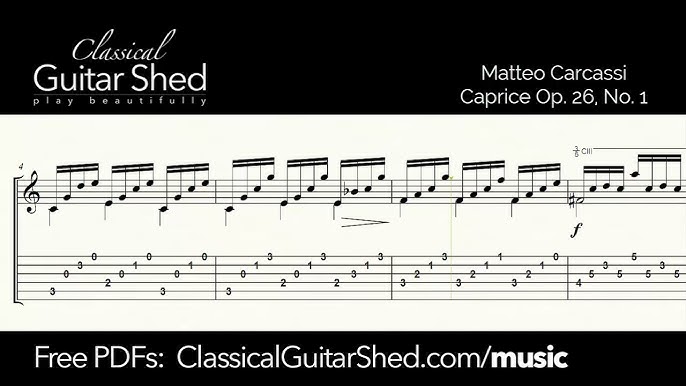
Some arrangements display notation and tab together. This can be especially useful: the notation explains the rhythm and musical details, while the tab shows a suggested place to play each note on the fretboard.
How to Read Guitar Notes
Before playing from notation, learn the names of the open strings. From the lowest-pitched string to the highest, standard tuning is E, A, D, G, B, and E. A note on the staff can often be played in several places on the guitar, so you may need to choose a comfortable position.
Rhythm is just as important as pitch. Note shapes and rests show how long to play or pause. Start by tapping the beat and counting the rhythm before picking up your guitar. This makes it easier to coordinate your hands once you begin playing.
Choosing Sheet Music for Your Level
If you’re new to guitar, look for music labeled beginner or easy. Simple melodies, open chords, and short exercises can help you build confidence without requiring advanced techniques. Check whether the arrangement includes tab, chord diagrams, fingerings, or audio examples—these features can make learning more approachable.
More experienced players may prefer arrangements that include fingerstyle patterns, barre chords, alternate tunings, or detailed notation for techniques such as bends, slides, and vibrato. Choose music that is challenging enough to keep you learning but not so difficult that you can’t make steady progress.
Tips for Practicing with Guitar Sheet Music
- Preview the page. Look for the key signature, time signature, tempo, repeated sections, and any unfamiliar symbols.
- Break the music into small sections. Work on a few measures at a time rather than trying to play the entire piece at once.
- Practice slowly. Use a metronome if helpful, and increase the tempo gradually as the notes and rhythm become more consistent.
- Pay attention to fingering. Suggested fingerings can help you move smoothly between notes and avoid unnecessary hand movement.
- Listen when you can. A recording can clarify rhythm, phrasing, and the intended feel of the piece, but use the written music to follow the notes and structure.
- Review regularly. Short, focused practice sessions often work better than rushing through a difficult passage.
Finding Guitar Sheet Music
Guitar sheet music is available in books, music stores, libraries, and online catalogs. Before downloading or buying an arrangement, check that it matches your skill level, tuning, and preferred format. Also make sure you’re using music from a legitimate source and following its licensing terms.
Build Your Skills One Song at a Time
Learning to read guitar sheet music takes patience, but every new piece can strengthen your sense of rhythm, pitch, and fretboard knowledge. Start with simple arrangements, practice in manageable sections, and gradually explore more detailed notation. Whether you use standard notation, tablature, or both, sheet music can open the door to a wider range of songs and musical ideas.
Guitar Sheet Music FAQ: Reading Music, Finding Scores, and Understanding Tabs
- Is sheet music good for guitar?
- What is guitar sheet music called?
- How to read guitar sheet music for dummies?
- How do I get guitar sheet music?
- What is the best guitar tab program?
- How do you read guitar sheet music for beginners?
- Where can I get sheet music for guitar?
- Do guitarists use tabs or sheet music?
Is sheet music good for guitar?
Yes, sheet music is useful for guitar because it shows pitch, rhythm, and musical structure, helping you learn melodies and understand how a piece is put together. Standard notation can take time to learn, and guitarists may need to choose among several fretboard positions for the same note. Tablature is often easier to start with because it shows which strings and frets to play. Using notation and tab together can help you build reading skills while learning songs.
What is guitar sheet music called?
Guitar sheet music is commonly called guitar notation or guitar music. It may be written in standard music notation, which uses notes on a five-line staff, or as guitar tablature (“tab”), which shows strings and fret numbers. Many guitar arrangements include both formats, along with chord diagrams or lyrics.
How to read guitar sheet music for dummies?
To read guitar sheet music as a beginner, start with tablature, or “tab”: six horizontal lines represent the guitar strings, and numbers show which frets to press. Read the lines from bottom to top—the bottom line is the low E string, and the top line is the high E string—and play the numbered frets in order. For standard notation, learn the note names on the five-line staff and the basic rhythm symbols, which show how long to play each note. Begin with a short, easy melody, go slowly, and use a recording or metronome to help with timing.
How do I get guitar sheet music?
You can get guitar sheet music from music stores, libraries, music publishers, and reputable online catalogs. Search by song title, artist, or skill level, and check whether you want standard notation, tablature, chord charts, or a combination. Before buying or downloading, make sure the arrangement matches your guitar tuning and playing level, and use authorized sources that have permission to distribute the music.
What is the best guitar tab program?
The best guitar tab program depends on your needs and budget. Guitar Pro is a popular choice for creating, editing, and playing back detailed tablature, while the free, open-source TuxGuitar offers many similar basics. MuseScore can be a good option if you want to work with standard notation as well as tabs, and Soundslice is useful for practicing along with synchronized audio or video. Compare features such as playback, editing tools, file compatibility, and ease of use to find the right fit.
How do you read guitar sheet music for beginners?
To read guitar sheet music as a beginner, start by learning the basics of standard notation: the five lines and spaces show pitch, while note shapes and rests show how long to play or pause. Learn the names of the guitar’s open strings—E, A, D, G, B, and E—and practice finding notes on the fretboard. Guitar tablature, or tab, can be an easier starting point: its six lines represent the strings, and numbers show which frets to press. Begin with a simple melody, take it one measure at a time, and practice slowly until the notes and rhythm feel comfortable.
Where can I get sheet music for guitar?
You can find guitar sheet music at local music stores, libraries, and reputable online sheet-music retailers. Many sites offer printable arrangements in standard notation, tablature, or both, with options for different skill levels and styles. Check that the song, tuning, and arrangement match what you need, and use licensed sources or public-domain music when downloading or printing.
Do guitarists use tabs or sheet music?
Guitarists use both tablature (tabs) and standard sheet music, depending on their needs and experience. Tabs show which strings and frets to play, making them a straightforward choice for learning guitar parts, while standard notation communicates pitch, rhythm, and musical details in a format shared across instruments. Many guitarists learn from arrangements that include both, using tabs for finger placement and sheet music for rhythm and structure.